
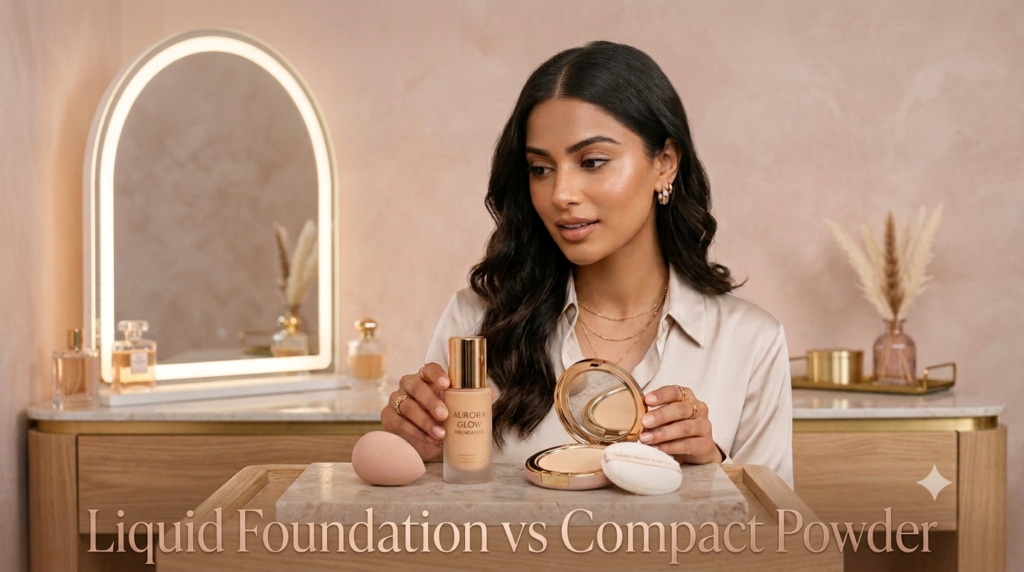
If you are choosing between liquid foundation vs. compact powder, the right option depends mainly on your skin type, desired coverage, finish, weather, and how quickly you want to apply your makeup.
Liquid foundation is generally more versatile when you want buildable coverage and a choice of natural, dewy, satin, or matte finishes. Compact powder is convenient for lightweight makeup, shine control, and quick touch-ups. However, a compact powder and a powder foundation are not always the same product.
For Indian weather, oily skin, and everyday makeup, a powder-based product can be convenient for controlling shine. For dry skin, fuller coverage or a more skin-like finish, a suitable liquid foundation may be more comfortable.
There is no universal winner. The better choice is the one that matches your skin and makeup goals.
Liquid Foundation vs. Compact Powder at a Glance
| Feature | Liquid Foundation | Compact Powder |
|---|---|---|
| Texture | Fluid and blendable | Pressed or loose powder |
| Coverage | Sheer to full, depending on formula | Usually light to medium; powder foundation can offer more. |
| Finish | Natural, dewy, satin, or matte | Usually natural to matte |
| Best for | Dry, normal, and combination skin and many skin types | Oily or combination skin and quick touch-ups |
| Oil control | Depends on formula | Generally useful for shine control |
| Application | Sponge, brush, or fingers | Brush, puff, or sponge |
| Touch-ups | Less convenient | Very convenient |
| Portability | Can be less convenient | Easy to carry |
| Best use | Customized base and fuller coverage | Quick everyday makeup and shine control |
The exact performance varies by formula, so the product label matters as much as the format.
What Is Liquid Foundation?
Liquid foundation is a fluid complexion product designed to even out the appearance of skin tone and create a smoother-looking base for makeup.
Liquid foundations are available in different coverage levels and finishes. Some formulas are lightweight and natural-looking, while others are designed for medium-to-full coverage.
Why choose liquid foundation?
Liquid foundation can be useful when you want:
- Buildable coverage
- A more customizable finish
- Better coverage for visible redness or uneven tone
- A natural, satin or dewy appearance
- A polished makeup base for occasions
- More flexibility in application
A major advantage is that you can usually build coverage gradually instead of applying a heavy layer everywhere.
For example, you might apply one thin layer across your face and add another small amount only where you need additional coverage.
What Is Compact Powder?
Compact powder is a pressed powder product commonly used to reduce shine, set makeup, smooth the appearance of the complexion and provide lightweight coverage.
But there is an important difference between compact powder and powder foundation.
A regular compact or pressed setting powder is mainly designed to set makeup and control shine. A powder foundation contains more pigment and is specifically designed to function as a foundation. Maybelline similarly distinguishes everyday compact powder from powder foundation, with compact powder positioned around lightweight coverage and touch-ups.
So, if you are asking whether compact powder can completely replace liquid foundation, the answer depends on the product.
Compact powder is useful when you want:
- Quick application
- Lightweight makeup
- Shine control
- Easy midday touch-ups
- A soft matte appearance
- A portable product for your handbag
For everyday office, college, or casual makeup, a compact can be a convenient choice when you do not need heavy coverage.
Liquid Foundation vs Compact Powder: Key Differences
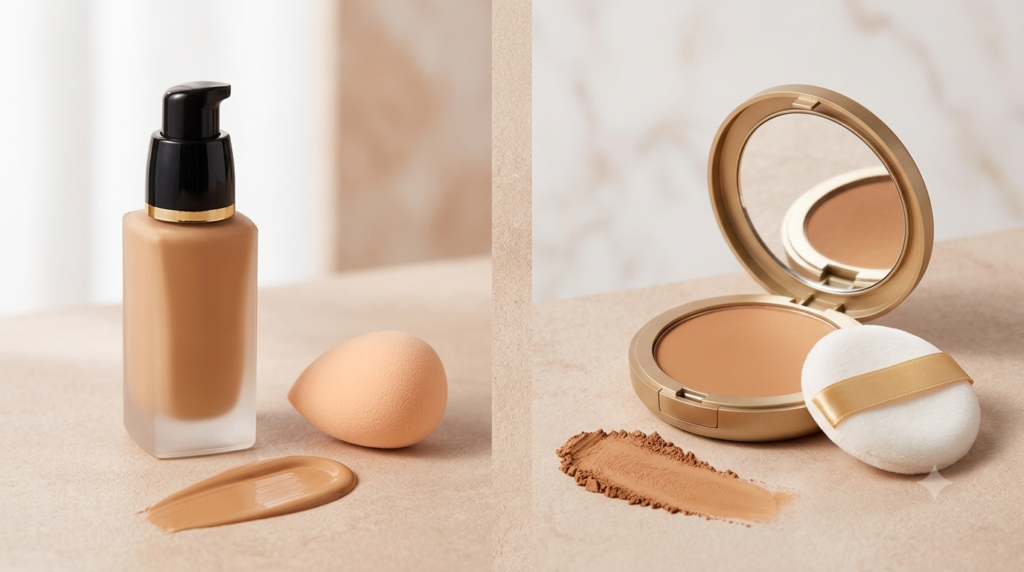
1. Coverage
If coverage is your biggest priority, liquid foundation generally offers more flexibility.
Many liquid formulas range from sheer to full coverage, allowing you to build the product gradually. Powder foundations can also provide build-able coverage, but a regular compact powder may provide considerably less coverage.
Practical takeaway: Choose liquid foundation when you need to cover redness, pigmentation, or uneven-looking skin. Choose compact powder when you mainly want light coverage and a more polished appearance.
2. Finish
Liquid foundation gives you more finish options.
Depending on the formula, you can find:
- Matte
- Natural
- Satin
- Radiant
- Dewy finishes
Compact powders generally lean toward a natural or matte appearance because powder helps reduce visible shine.
If you prefer a fresh, luminous makeup look, a suitable liquid formula may give you more flexibility.
3. Texture and Feel
Liquid foundation feels fluid during application and usually needs to be blended into the skin.
Compact powder feels lighter and drier because it is a powder formula.
This does not automatically mean one is more comfortable than the other. Your skin condition, product formula and application technique all matter.
4. Oil Control
Compact and powder-based products can be particularly useful when excess shine is your main concern.
Powder foundation is commonly used for oily skin because of its lightweight feel and oil-control properties. Liquid foundation can also work for oily skin when you choose an appropriate oil-free or matte formula and set it correctly.
Practical takeaway: Oily skin does not automatically mean you must avoid liquid foundation. Focus on the formula and finish.
5. Application
Liquid foundation usually requires more blending.
You can apply it using:
- Makeup sponge
- Foundation brush
- Clean fingertips, depending on the formula
Compact powder can be applied with a:
- Powder brush
- Puff
- Makeup sponge
For quick makeup, compact powder generally requires fewer steps.
6. Portability
This is where compact powder has a practical advantage.
A compact is easy to carry in a handbag and can be reapplied without needing a separate mixing surface or extensive blending.
Liquid foundation can still be travel-friendly, but you may need additional tools and more care during application.
7. Touch-Ups
For midday touch-ups, compact powder is usually more convenient.
If your T-zone becomes shiny during the day, you can lightly press powder onto those areas rather than rebuilding your entire base.
Avoid repeatedly layering large amounts of powder, though. Too much product can make the complexion look heavy or cakey.
Which Is Better for Your Skin Type?
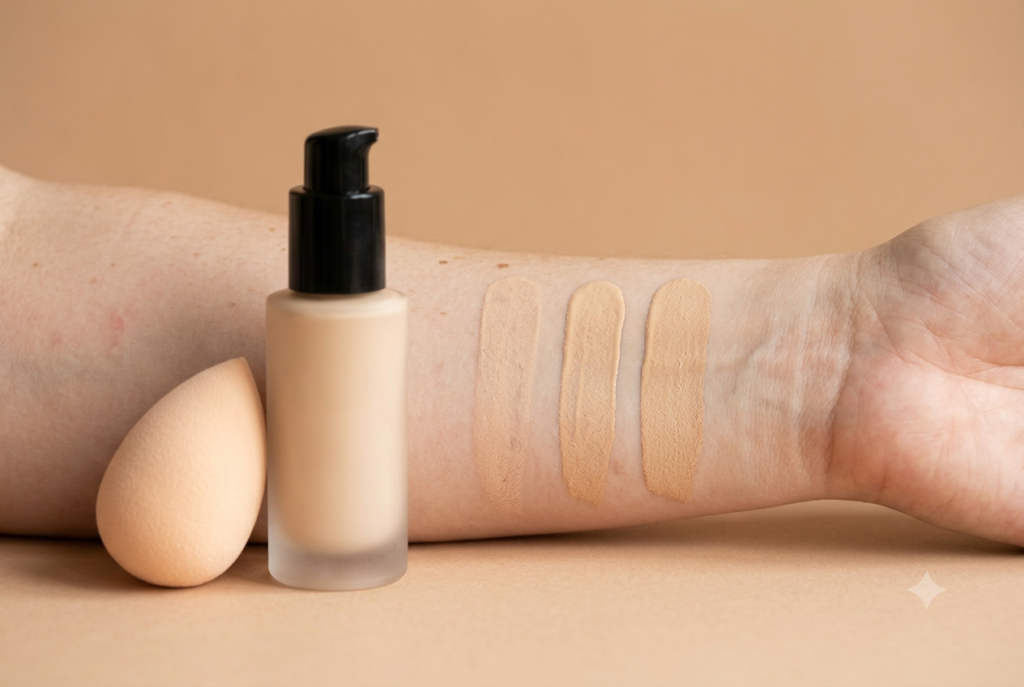
Liquid Foundation for Dry Skin
Dry skin often benefits from a foundation formula that does not emphasize dry patches.
A hydrating or natural-finish liquid foundation may create a smoother-looking appearance than a very matte powder product.
Best approach: Moisturize properly, allow skincare to settle, and then apply a thin layer of suitable liquid foundation.
Compact Powder for Oily Skin
Compact powder can be useful for oily skin because powder helps reduce the appearance of shine.
The American Academy of Dermatology also recommends looking for oil-free, noncomedogenic makeup when managing oily skin.
For oily skin, consider:
- Lightweight formulas
- Matte finishes
- Oil-free makeup where suitable
- Noncomedogenic products when relevant
- Light layers instead of excessive powder
Combination Skin
Combination skin gives you more flexibility.
You may prefer liquid foundation across most of the face and use powder selectively around the forehead, nose and chin.
This targeted approach can prevent the entire face from looking overly matte.
Normal Skin
Normal skin can generally work with either format.
Your decision can therefore focus more on:
- Coverage
- Finish
- Occasion
- Convenience
- Personal preference
Which Gives Better Coverage: Liquid or Compact?
Liquid foundation usually offers greater coverage flexibility, but a true powder foundation can also provide medium or higher coverage.
The key distinction is whether you are using a compact powder or a powder foundation.
A regular compact is primarily designed for setting, shine control or light coverage. A powder foundation contains more pigment and is designed to act as a foundation.
If you want to cover visible pigmentation or redness, liquid foundation may be easier to build precisely.
If you want quick, lightweight coverage, a powder foundation or suitable compact may be more convenient.
Which Looks More Natural?
A natural finish depends more on formula, shade match, skin preparation, and application technique than simply choosing liquid or powder.
A thin layer of well-matched liquid foundation can look very skin-like.
Likewise, a finely milled powder applied lightly can create a soft, natural finish.
The biggest mistake is usually applying too much product.
For a natural-looking base:
- Prepare your skin according to your skin type.
- Use a small amount of product.
- Blend gradually.
- Add coverage only where needed.
- Avoid repeatedly layering powder over areas that are already dry.
Which Is Better for Indian Weather?
India’s heat and humidity can make shine and makeup longevity important considerations.
Powder products can be useful for controlling visible shine, particularly for oily skin. Liquid foundation can also perform well when paired with appropriate skin preparation, primer, and setting products.
Instead of choosing a formula solely because the weather is hot, consider your individual skin type.
For example:
Oily skin + humid weather: Lightweight matte liquid foundation or powder foundation may be suitable.
Dry skin + hot weather: A lightweight natural-finish liquid foundation may be more comfortable than a heavily matte powder.
Combination skin: Use a balanced base and concentrate powder on areas that become oily.
Can You Use Liquid Foundation and Compact Powder Together?
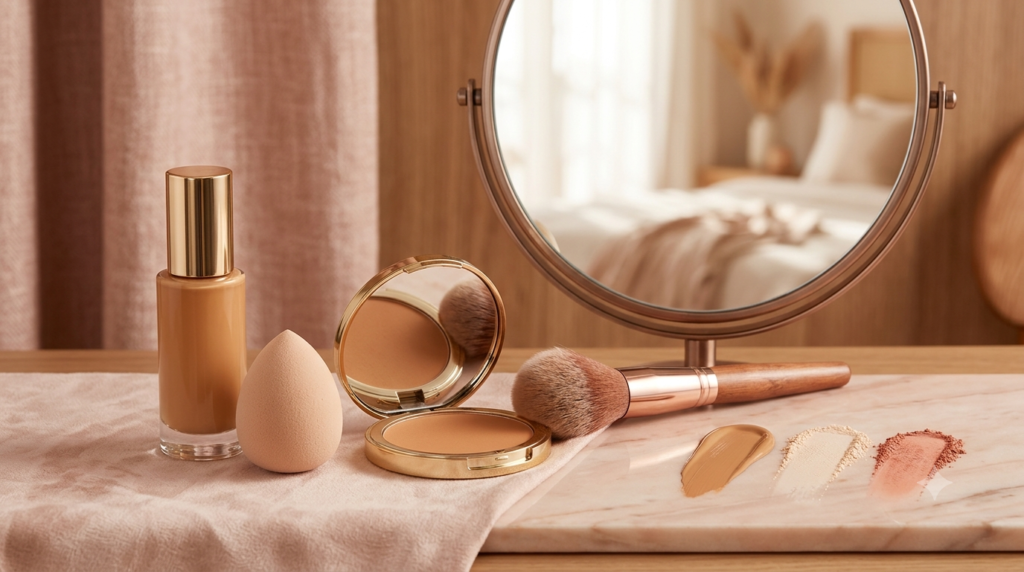
Yes.
Using both products can be useful when you want the coverage of liquid foundation with additional shine control.
A simple routine can be:
Moisturizer → Primer → Liquid Foundation → Concealer → Compact Powder
Apply the compact mainly where you need it instead of covering the entire face with a thick layer.
For example, you could use liquid foundation across the face and lightly press compact powder around the nose, forehead, and chin.
This technique can give you a more balanced finish.
Liquid Foundation vs Compact Powder for Daily Makeup
For everyday makeup, your lifestyle matters.
College or quick morning makeup
Compact powder can be convenient when you want to get ready quickly and prefer light coverage.
Office makeup
Either can work. A lightweight liquid foundation gives you more control over coverage, while compact powder makes quick touch-ups easier.
Party makeup
Liquid foundation may be preferable when you want more coverage and a polished base.
Wedding or festive makeup
A suitable liquid foundation can offer more flexibility for building coverage and creating the desired finish. Powder can then be used strategically to set the base and control shine.
Travel makeup
Compact powder is convenient because it is easy to carry and reapply.
Liquid Foundation: Pros and Cons
Pros
- Buildable coverage
- Multiple finish options
- Suitable for many makeup styles
- Can create a seamless-looking base
- Useful for medium-to-full coverage
Cons
- Requires more blending
- Can feel heavy if over-applied
- Some formulas may emphasize texture or dry patches
- Touch-ups can be less convenient
Compact Powder: Pros and Cons
Pros
- Quick application
- Easy to carry
- Convenient for touch-ups
- Helps reduce visible shine
- Lightweight options are available
- Useful for everyday makeup
Cons
- Regular compact powder may not provide foundation-level coverage
- Too much powder can look cakey
- Very matte formulas may emphasize dry areas
- Coverage depends heavily on the specific product
Common Mistakes to Avoid
Using compact powder as a full foundation without checking the product
Not every compact is designed to replace the foundation. Check whether the product is a setting powder, pressed powder, or powder foundation.
Applying too much powder
More powder does not always mean better oil control. Heavy layering can make makeup look thick.
Skipping skin preparation
Foundation sits differently on hydrated and poorly prepared skin.
Choosing a shade only from the product name
Shade names can vary between brands. When possible, check the brand’s shade information and test the shade against your jawline.
Choosing a formula only because it is popular
A product that works beautifully for oily skin may not be ideal for dry skin. Match the formula to your own needs.
So, Liquid Foundation or Compact Powder: Which Should You Choose?
The answer depends on what you want from your makeup base.
Choose liquid foundation if you want:
- Medium-to-full coverage
- Buildable coverage
- More finish options
- A polished base
- A natural, satin or dewy appearance
Choose compact powder if you want:
- Lightweight everyday makeup
- Quick application
- Shine control
- Easy touch-ups
- A portable makeup product
And you do not necessarily have to choose only one.
For many makeup routines, liquid foundation and powder can work together: liquid provides the base, while powder helps control shine and set selected areas.
The most important factors are your skin type, desired coverage, finish, climate, and application preference.
Final Takeaway
When comparing liquid foundation vs. compact powder, there is no single formula that works best for everyone.
Liquid foundation generally gives you greater flexibility in coverage and finish, while compact powder is particularly convenient for lightweight makeup, shine control, and touch-ups. Powder foundation sits somewhere between the two by offering foundation-level coverage in a powder format.
For dry skin or fuller coverage, a suitable liquid foundation may be the more practical starting point. For oily skin, quick makeup and easy touch-ups, compact or powder-based products can be useful.
Your ideal base is ultimately the one that matches your skin, makeup goals and daily routine.